Coastline, Shoreline, Waterfront, Harbourfront, and Littoral: A Clear Guide to Coastal Terms
Many English learners (and even fluent speakers) mix up words related to the sea. Terms like coastline, shoreline, waterfront, harbourfront, and littoral often appear in travel writing, geography, literature, and news reports, but they do not mean the same thing.
1) Coastline vs Shoreline

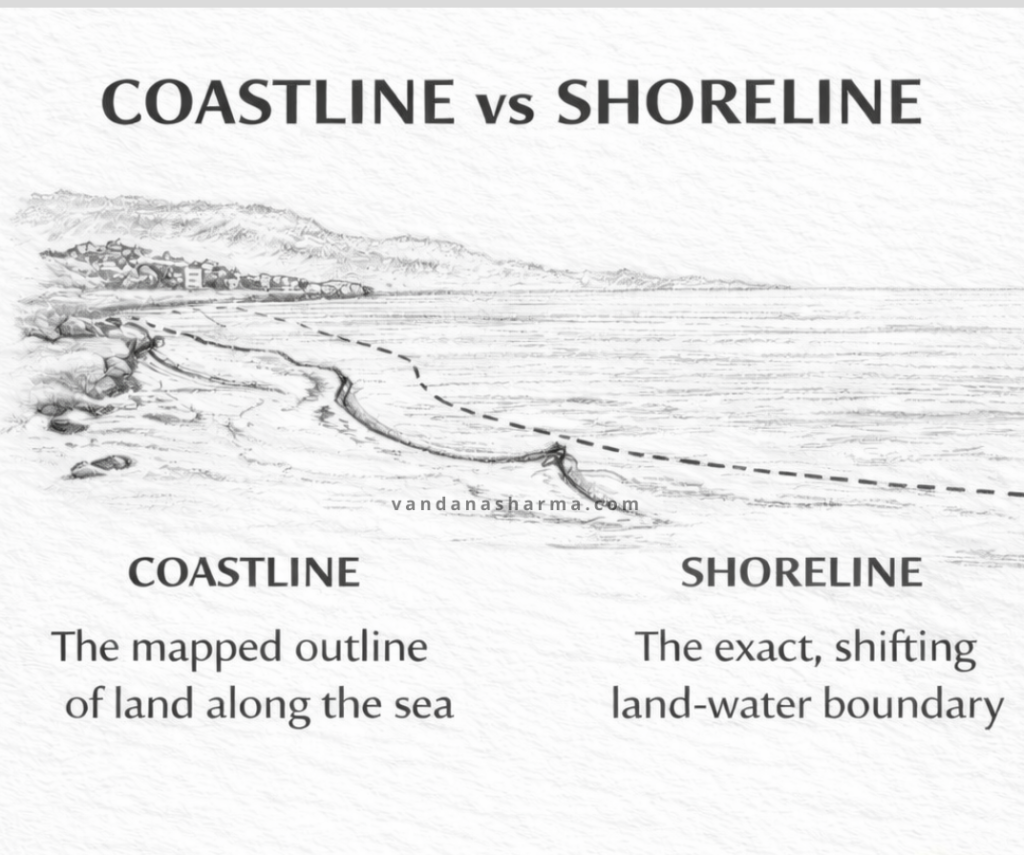
A coastline refers to the broad outline of land along the sea. It is a geographic term often used when describing a country or region. Key idea: Coastline is what you usually see on a map. Example: India has a long coastline along the Arabian Sea.
A shoreline is the exact line where water meets land. Unlike a coastline, it can shift with tides, waves, erosion, or seasons. Key idea: Shoreline is the edge you can stand on, and it can move. Example: The shoreline moved farther back as the tide came in.
2) Waterfront vs Harbourfront

A waterfront refers to the developed edge of a city or town near water. It includes human structures such as promenades, markets, restaurants, ports, and public spaces. Key idea: Waterfront is about human activity and buildings near water. Example: The city’s waterfront is lined with cafés and walking paths.
A harbourfront is the part of the waterfront that is specifically connected to a harbour. It is more functional and work-oriented, involving docks, boats, ferries, and cargo areas. Key idea: Harbourfront is the working waterfront near a harbour. Example: The harbourfront was busy with fishing boats and ferries.
3) Littoral
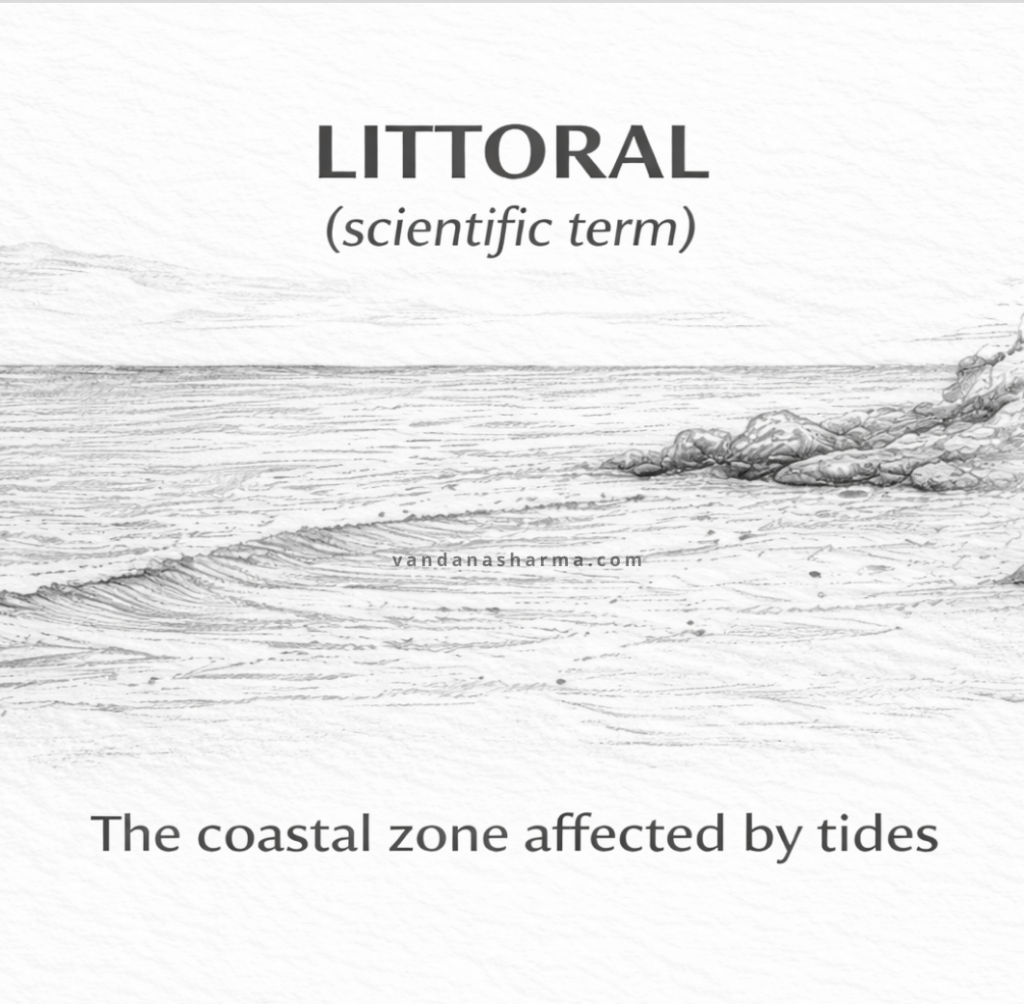
Littoral is a scientific and academic term for the coastal zone, especially the area affected by tides. It is commonly used in marine biology, environmental studies, and geography. Key idea: Littoral is a scientific word, not a casual one. Example: Many species thrive in the littoral zone because of tidal movement.
Quick Summary (Easy Memory Guide)
- Shoreline = the edge you can stand on (changes with tides)
- Coastline = the edge you draw on a map (broader and more stable)
- Waterfront = the developed area beside water (city life)
- Harbourfront = the working area around a harbour (boats and docks)
- Littoral = the scientific term for the coastal zone (tides and ecology)
Final Note
Choosing the right word is not only a matter of vocabulary. It is a matter of precision. When we use the correct term, we describe the world more clearly, and we avoid mixing geography with imagination.