Wuthering Heights by Emily Brontë: Summary, Themes, and Gothic Darkness
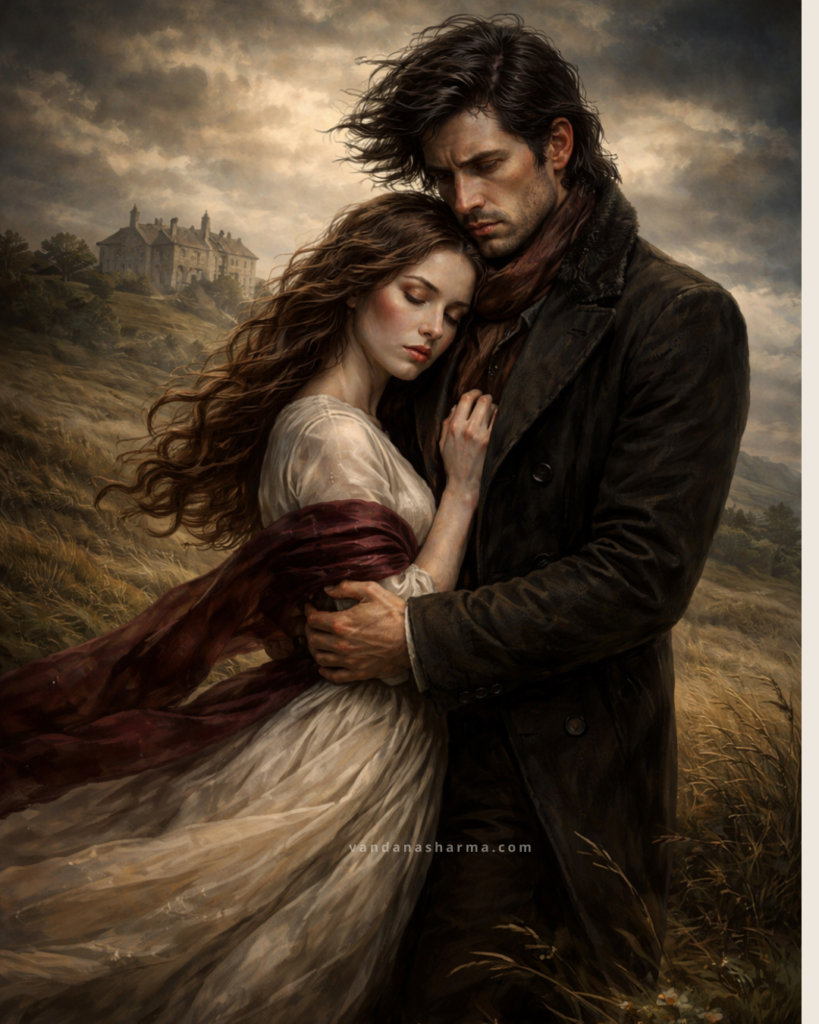
Published in 1847, Wuthering Heights by Emily Brontë is a Gothic classic about obsessive love, revenge, and the haunting power of the past. This Wuthering Heights summary explains the full plot, ending, and key themes in clear modern language.
Emily Brontë (1818–1848) published the novel under the pen name Ellis Bell, and Wuthering Heights remains her only novel. Set on the lonely Yorkshire moors, it is not a gentle romance but a storm of passion, cruelty, and generational trauma, told through layered narration and haunted by what refuses to stay buried.
Even today, Wuthering Heights remains one of the most unsettling and unforgettable novels in English literature, because it explores what happens when love stops being love and becomes possession.
Quick Glossary (So You Don’t Get Lost)
Yorkshire Moors
Wild, open stretches of windy hills in northern England, often cold, lonely, and covered in heather.
Moors
Open countryside with few trees, strong winds, and an isolated, bleak atmosphere.
Wuthering Heights
A rough, storm-beaten farmhouse on the moors, originally belonging to the Earnshaw family.
Thrushcross Grange
A grand, elegant country house nearby, belonging to the wealthy Linton family. (Grange
An old English word for a large country house or estate.)
Sexton
A church official responsible for the churchyard, including graves and burials.
Gothic Novel
A style of fiction filled with darkness, intense emotion, haunting atmosphere, supernatural hints, and themes like obsession, madness, and death.
Wuthering Heights Summary (The Story in Simple Words)
The novel begins when Mr. Lockwood, a gentleman renting Thrushcross Grange (the elegant home of the wealthy Linton family), visits his landlord Heathcliff, who owns a nearby house called Wuthering Heights (a harsh farmhouse on the moors). Lockwood finds the household disturbing, unfriendly, and strange. Soon, the housekeeper Nelly Dean begins telling him the tragic history behind the two houses. Lockwood later leaves the moors for several months, but Nelly’s account continues, revealing how the tragedy unfolds across two generations.
Years earlier, the owner of Wuthering Heights, Mr. Earnshaw, brings home a poor orphan boy from Liverpool and names him Heathcliff. Heathcliff’s arrival causes jealousy, especially in Earnshaw’s son Hindley, but Earnshaw’s daughter Catherine forms a fierce bond with Heathcliff. They grow up roaming the moors together, wild and inseparable.
After Mr. Earnshaw dies, Hindley becomes the master of Wuthering Heights and treats Heathcliff cruelly, reducing him to the status of a servant. Heathcliff grows up humiliated and full of rage. Meanwhile, Catherine becomes familiar with the wealthy Linton family at Thrushcross Grange and grows close to Edgar Linton, who represents comfort, refinement, and social status.
Catherine is torn between two lives. She admits she loves Heathcliff deeply and feels he is part of her soul, but she chooses to marry Edgar because Heathcliff is poor and socially inferior. When Heathcliff overhears this decision, he disappears.
Heathcliff returns years later, now mysteriously wealthy and determined to take revenge on everyone who wronged him. He encourages Hindley’s self-destruction through gambling and debt. Over time, Heathcliff uses Hindley’s financial ruin to seize control of Wuthering Heights, taking the house for himself.
Catherine’s emotional conflict destroys her health. Trapped between Edgar’s respectability and Heathcliff’s fierce presence, she becomes mentally unstable and falls seriously ill. After giving birth to her daughter Cathy Linton, Catherine dies. Heathcliff is devastated, but his grief becomes obsessive. His love crosses into something Gothic and supernatural, as he begs Catherine’s spirit not to leave him.
After Catherine’s death, Heathcliff’s revenge continues into the next generation. Hindley’s son Hareton Earnshaw, who should inherit Wuthering Heights, is deliberately kept uneducated and treated harshly. Heathcliff repeats the cycle of cruelty, turning Hareton into a rough, damaged young man.
Heathcliff also destroys the Linton family line. He forces Edgar’s daughter Cathy into marriage with his sickly son Linton Heathcliff, using this marriage to gain control of Thrushcross Grange as well. Linton, who is frail and unhealthy, dies not long after the marriage, leaving Cathy trapped and miserable at Wuthering Heights under Heathcliff’s rule. The novel reaches its darkest point as both households fall under his control.
Yet the story does not end in total darkness. Cathy gradually forms a bond with Hareton. She recognizes that Hareton is not cruel by nature, only shaped by years of neglect and manipulation. Cathy begins teaching him to read, and their relationship slowly grows into genuine love, offering a healthier contrast to the destructive obsession of Catherine and Heathcliff.
In the final part of the novel, Heathcliff begins to lose interest in revenge. He becomes haunted by visions and memories of Catherine, as if the past is finally consuming him. Soon after, Heathcliff dies. When Lockwood returns later, he finds that Cathy and Hareton are preparing to marry, suggesting that the cycle of hatred has finally ended and peace has returned to both houses.
Quote + Context (A Gothic Moment of Obsession)
One of the most famous lines in the novel comes from Heathcliff after Catherine’s death:
“Be with me always—take any form—drive me mad! only do not leave me in this abyss, where I cannot find you!” — Wuthering Heights, Volume 2, Chapter 2 (Chapter 16 in many editions)
Context: Heathcliff speaks these words after Catherine dies, when grief turns into obsession. He would rather be haunted by her spirit than live without her. This moment captures the Gothic power of the novel: love becomes something terrifying, and even death is not strong enough to end it.
Why Wuthering Heights Still Matters Today
Wuthering Heights survives because it is brutally honest about the darker side of human emotion. It shows how love can become control, how pain can turn into revenge, and how trauma can echo through generations. Yet it also offers a final, quiet hope through Cathy and Hareton, suggesting that healing is possible, even after a legacy of destruction.
This is not a romantic fairy tale. It is a warning, a tragedy, and a masterpiece, still powerful enough to unsettle modern readers almost two centuries later.
Frequently Asked Questions (FAQ)
Q1. What is Wuthering Heights about in simple words?
Wuthering Heights is a story of obsessive love and revenge set on the Yorkshire moors, where Heathcliff’s suffering turns into cruelty that affects two generations.
Q2. Is Wuthering Heights a love story or a tragedy?
It is mainly a tragedy. The novel shows how love can become destructive when it turns into obsession, pride, and emotional violence.
Q3. Why is Wuthering Heights considered a Gothic novel?
Because it has a dark atmosphere, intense emotions, themes of death and haunting, isolation on the moors, and moments where the supernatural is strongly suggested.
Q4. Why does Catherine marry Edgar instead of Heathcliff?
Catherine loves Heathcliff deeply, but she marries Edgar for social status, comfort, and security. She believes marrying Heathcliff would ruin her future.
Q5. How does Heathcliff acquire Wuthering Heights?
Heathcliff takes control by exploiting Hindley’s alcoholism and gambling debts. When Hindley dies, Heathcliff uses the debt and legal control to claim the property.
Q6. What happens to Linton Heathcliff?
Linton is frail and sickly. He dies not long after marrying Cathy, leaving her trapped at Wuthering Heights under Heathcliff’s control.
Q7. Do Cathy and Hareton end up together?
Yes. Cathy and Hareton gradually fall in love, and by the end of the novel they plan to marry, bringing peace after years of hatred.
Q8. What is the ending of Wuthering Heights?
Heathcliff dies, and the cycle of revenge ends. Cathy and Hareton plan to marry and live at Thrushcross Grange, suggesting a calmer future.
Q9. When was Wuthering Heights written and published?
It was published in 1847. Emily Brontë wrote it during the mid-19th century and published it under the name Ellis Bell.
Q10. Why is Wuthering Heights still popular today?
Because it explores timeless themes like toxic love, revenge, emotional trauma, class conflict, and the struggle to break destructive cycles